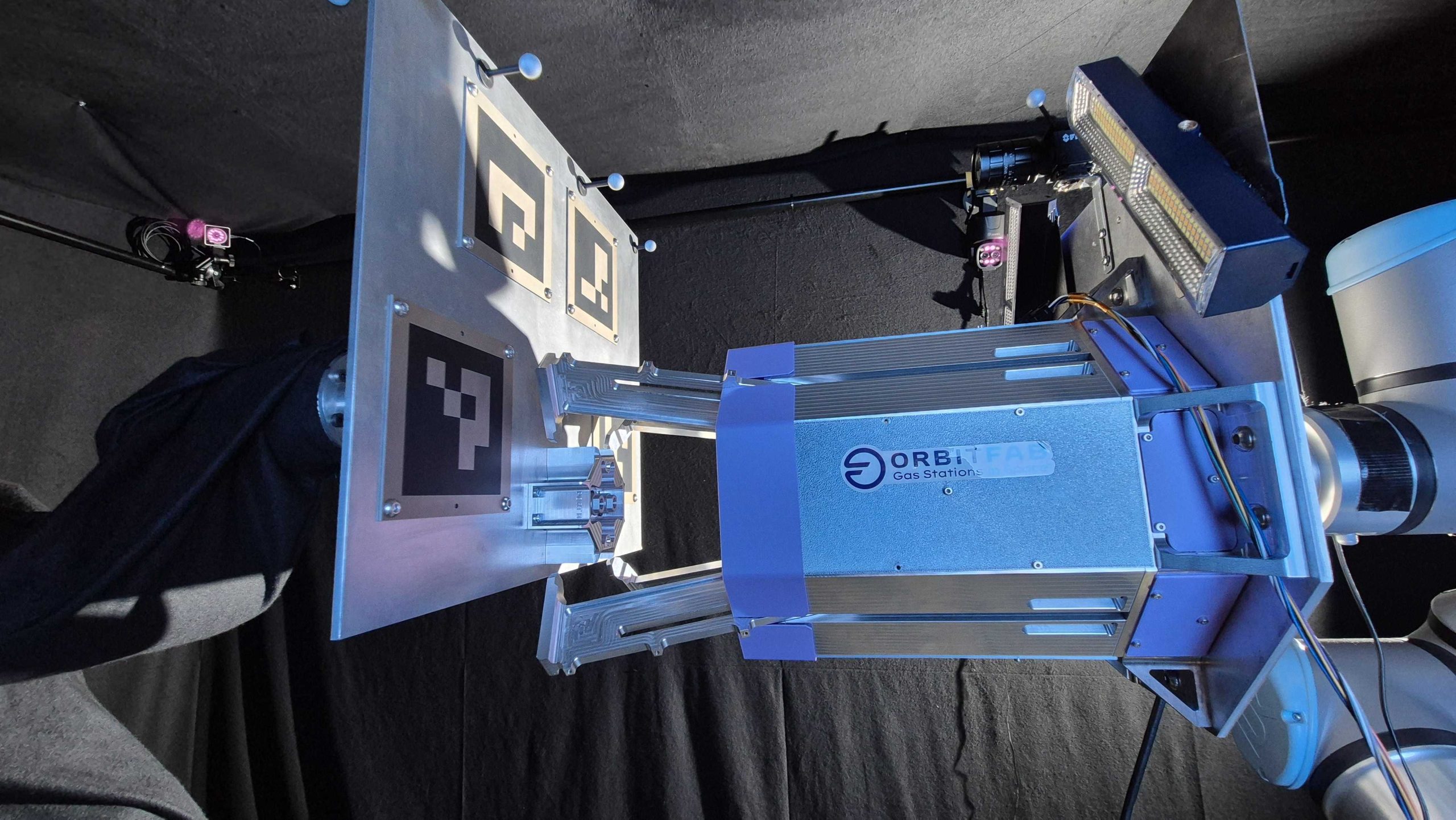
April 10, 2025 — London – Lúnasa is proud to announce that it has been awarded a contract by the European Space Agency (ESA) for a groundbreaking activity titled “Deep Neural Network for Robust Satellite Model Matching.”
This initiative focuses on enhancing the safety and reliability of autonomous space missions through advanced artificial intelligence. Specifically, the project will develop a deep learning-based system for relative pose estimation during autonomous rendezvous and proximity operations, with a strong emphasis on robustness against challenging space backgrounds such as star fields, planets, and other celestial bodies.
Autonomous proximity operations, including in-orbit servicing, debris removal, satellite inspection, and space manufacturing, depend on precise and dependable relative pose estimation. Vision-based navigation is central to these missions, but ensuring consistent performance under real-world space conditions remains a critical challenge. Lúnasa’s deep neural network solution aims to meet this need by learning to recognise and match satellite models in visually complex and dynamic environments.
“We are thrilled to collaborate with ESA on this forward-looking initiative,” said Amin Chabi, Founder & CEO at Lúnasa. “Robust pose estimation is a key enabler for the future of autonomous operations in space, and this activity will push the frontier of what’s possible with AI in orbit.”
“Precise and reliable pose estimation, determining the relative position and orientation between spacecraft, is a critical enabler of safe and effective on-orbit rendezvous operations. In scenarios involving proximity manoeuvres, docking, servicing, or debris removal, such operations can be drastically improved with AI, with pose estimation directly influencing mission success and operational safety, said Manuel Sanchez-Gestido, ESA Technical-Officer of the activity.” This project continues Lúnasa’s commitment to innovation at the intersection of artificial intelligence and space autonomy, building tools that make next-generation space operations more capable, reliable, and safe.